Objective
This blog explains the real difference between hiring movers and moving by yourself in 2026. It looks at time, labor, direct costs, and the hidden expenses people often miss. The goal is to help readers make a clear decision based on real moving needs, not just the lowest number they see first. Kapoor Moving Services shares practical moving guidance and starting price ranges on its website, which makes this comparison more grounded in real Ontario moving conditions.
Key Takeaways
- DIY moving often looks cheaper at first, but truck rental, mileage, fuel, boxes, and lost time can quickly narrow the savings.
- Professional movers usually cost more upfront, but they can save major time and reduce physical strain on moving day.
- Small local moves may still make sense as a DIY project, especially when access is easy and furniture is limited. This is an inference based on rental pricing and moving cost ranges.
- Larger homes, stairs, condo rules, and long-distance trips often make professional help more practical.
- A smart choice comes from comparing the full move, not just the base price.
Table Of Contents
- Why This Choice Feels Harder In 2026
- Professional Movers Vs. DIY Moving: The Core Difference
- The Real Time Breakdown
- The Real Money Breakdown
- Hidden Costs People Forget
- When DIY Makes Sense
- When Professional Movers Usually Make More Sense
- Quick Comparison Table
- Final Thoughts
- FAQs
Why This Choice Feels Harder In 2026
Moving has never been only about boxes. It is also about time, effort, planning, and stress. In 2026, the choice feels harder because moving costs are more layered than many people expect. A rental truck may start with a low advertised price, but the final total can rise with mileage, fuel, extra days, and add-ons. Professional movers can look expensive at first, yet they may save hours of labor and reduce delays.
That is why the debate between professional movers and DIY movers is more real than ever. Many people searching for movers in Pickering, Ontario, assume DIY is the budget option first. But once they count fuel, boxes, truck charges, and time away from work, the answer is not always so simple. Kapoor Moving Services also notes that access, home size, stairs, distance, and extra services all affect the real total.
A good decision starts with one honest question. Are you trying to spend less money, or less total effort?
Professional Movers Vs. DIY Moving: The Core Difference
The main difference is easy to understand. DIY moving reduces cash costs by replacing paid labor with your own. Hiring movers raises the price because you are paying for trained help, equipment, loading skills, and a more organized process.

With DIY, you pack, lift, load, drive, unload, and return the truck yourself. With movers, much of that work shifts to a team. That does not mean one option is always better. It means the trade-off is clear. You either spend more money or more personal time and energy.
This is where many people misjudge the move. They compare only the quote and forget to compare the workload.The Real Time Breakdown : Time is one of the highest hidden costs in any move
A DIY move often takes longer than expected because the work starts before moving day. You need to find boxes, book the truck, organize helpers, pack, lift, drive, unload, and return equipment. If anything goes wrong, the day can stretch into the next day. U-Haul states that in-town rentals use a flat rental fee plus per-mile charges, and extra days cost more.
A professional move is usually faster because the crew arrives ready to work. They already have a loading system, tools, and experience moving large items through doors, halls, and stairs. This does not make the move stress-free, but it often makes the timeline more controlled. Kapoor Moving Services also explains that extra hours are billed at an hourly rate, which shows how closely time affects the final price.
For many families, time has real value. Missing work, managing tired helpers, or dealing with an overnight truck delay can cost more than expected.
The Real Money Breakdown
Now, let’s compare the cost of hiring movers vs DIY moving more realistically.
Professional Movers
Kapoor Moving Services says local moves typically start at around $400 and long-distance moves at around $600, with extra time billed at an hourly rate. Its site also says the exact price depends on distance, home size, and add-on services.
What you are usually paying for:
- labor
- truck use
- moving equipment
- faster loading and unloading
- less physical strain
- a more organized moving day
DIY Moving
DIY moving usually begins with a low truck rate. U-Haul advertises local truck rentals starting at $19.95, but that price does not include mileage and fees. U-Haul also explains that one-way rentals include a set number of days and miles, with extra charges possible if limits change.
What you may end up paying for:
- truck rental
- mileage
- fuel
- moving blankets or dollies
- boxes and tape
- food for helpers
- extra rental day charges
- time off work
That is the real problem with the 2026 DIY moving cost breakdown. The first number is often not the final number. For a related internal read, this keyword can point to Kapoor Moving Services’ recent cost guide on Toronto moving prices in 2026.
Hidden Costs People Forget
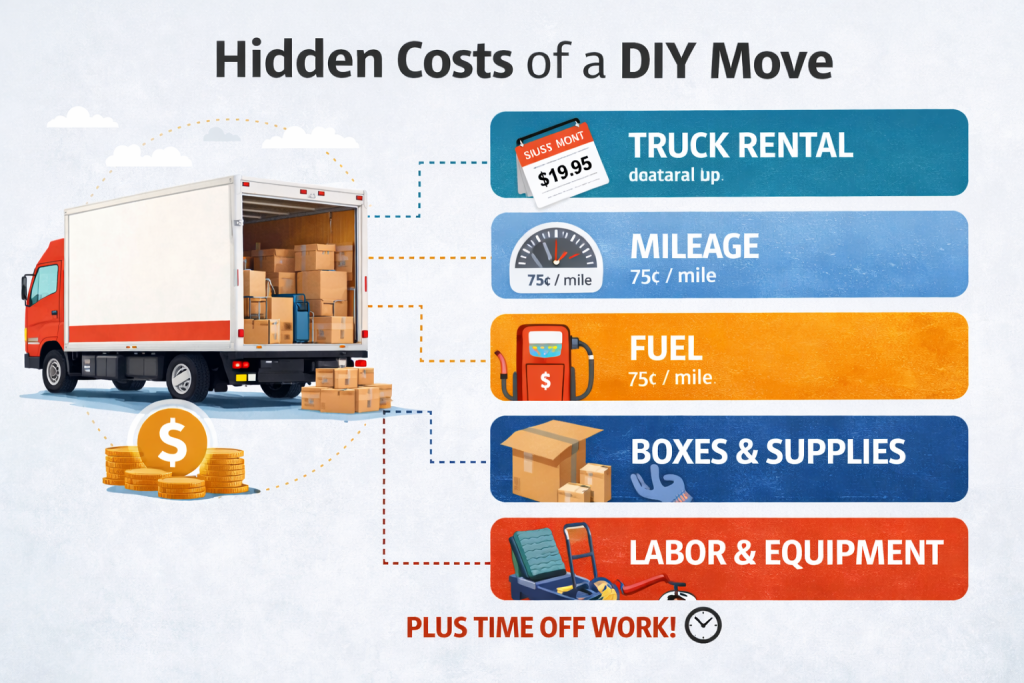
This is where budgets usually fall apart.
On the mover’s side, extra costs can include:
- stairs
- long carry distance
- elevator delays
- piano or fragile-item handling
- packing service
- storage needs
Kapoor Moving Services advises people to ask whether the quote includes packing materials, fuel costs, insurance, and heavy-item handling before they book.
On the DIY side, people often forget about:
- gas
- mileage charges
- truck protection add-ons
- extra boxes
- furniture damage
- friend cancellations
- parking or building access problems
Even public cost guides show that prices vary widely by home size and service level, which is why simple price comparisons can be misleading.
When DIY Makes Sense
DIY can still be a smart choice in some cases.
It often works best when:
- You live in a small apartment
- The move is local
- You have only a few large items
- Building access is easy
- You have reliable help
- Your schedule is flexible
In those cases, the move may stay simple enough that the savings are real.
When Professional Movers Usually Make More Sense
Professional help usually makes more sense when the move is larger or more complicated.
That includes:
- family homes
- condo moves with elevators
- long-distance moves
- heavy furniture
- tight deadlines
- multi-floor homes
- moves where damage or injury would be a serious problem
Kapoor Moving Services gives clear examples of how planning, access, and timing affect the move. That reflects a larger truth: the harder the move gets, the more valuable skilled help becomes.
Quick Comparison Table
| Factor | DIY Moving | Professional Movers |
| Upfront Cost | Usually lower | Usually higher |
| Personal Time | Much higher | Much lower |
| Physical Effort | Very high | Lower |
| Speed | Less predictable | More controlled |
| Damage Risk | Higher without experience | Lower with trained help |
| Best Fit | Small, simple moves | Larger or complex moves |
Final Thoughts
The best way to compare professional movers vs. DIY moving is to stop focusing only on the base price. Look at the full move from start to finish. Count the labor. Count the time. Count the risk of delays and damage. Then compare that against the real service value. Kapoor Moving Services offers a helpful benchmark because its website shows both starting prices and the factors that change a quote. In 2026, DIY may still save money on a small move, but for bigger or more time-sensitive moves, professional help can be the smarter value overall.
FAQs
Is DIY Moving Always Cheaper Than Hiring Movers?
No. DIY often starts lower, but mileage, fuel, supplies, and extra time can quickly erode those savings.
What Is The Biggest Hidden Cost In A DIY Move?
Time is one of the highest hidden costs, along with fuel, extra rental time, and damage from poor packing or lifting mistakes.
How Much Do Movers Usually Charge In Ontario?
Kapoor Moving Services says local moves typically start around $400 and long-distance moves around $600, with added hourly charges depending on move time and scope.
When Is Hiring Movers Usually Worth It?
It is often worth it for larger homes, stairs, long-distance moves, condo logistics, and tight moving timelines.
What Should People Ask Before Hiring A Moving Company?
Ask what the quote includes, whether fuel, materials, and insurance are covered, and whether there are extra charges for stairs, elevators, or heavy items.