
Objective
This blog explains what to expect when moving a piano in Oshawa or Belleville. It also explains how to prepare your home, your piano, and your moving day plan so the process goes more smoothly. The goal is to help homeowners understand the practical side of piano moving in simple language. A piano is large, heavy, and easy to damage if handled improperly. That is why people often look for local specialty movers in Oshawa and Belleville rather than treating the job as a typical furniture move. If you are planning a move and want clear answers, this guide will help. Many families looking into piano moving services, including those who contact Kapoor Moving Services, usually want to know the same thing: what should I do before moving day, and what should I expect once the movers arrive?
Key Takeaways
- A piano should never be moved like regular furniture.
- Preparation matters as much as the move itself.
- Measuring doors, halls, and stairs helps avoid problems.
- The safest moves follow solid professional piano moving tips.
- Knowing how to move a piano safely starts with recognizing its weight and shape.
- Hiring local specialty movers in Oshawa and Belleville usually makes the move safer and more organized.
Table Of Contents
- Why Piano Moving Is Different
- What To Expect From Local Specialty Movers Oshawa Belleville
- How To Move A Piano Safely Before Moving Day
- Professional Piano Moving Tips For Inside The Home
- What Happens On Moving Day
- How To Prepare The New Space
- Common Mistakes To Avoid
- FAQs
- Conclusion
Why Piano Moving Is Different
A piano looks strong from the outside, but it is not simple to move. It has delicate working parts inside. It also carries its weight unevenly. That means one wrong lift, one sharp turn, or one rough bump can damage the piano or the house.
This is the first thing people need to understand about how to move a piano safely. The job is not only about strength. It is also about balance, planning, equipment, and patience.
A piano can cause problems in many ways:
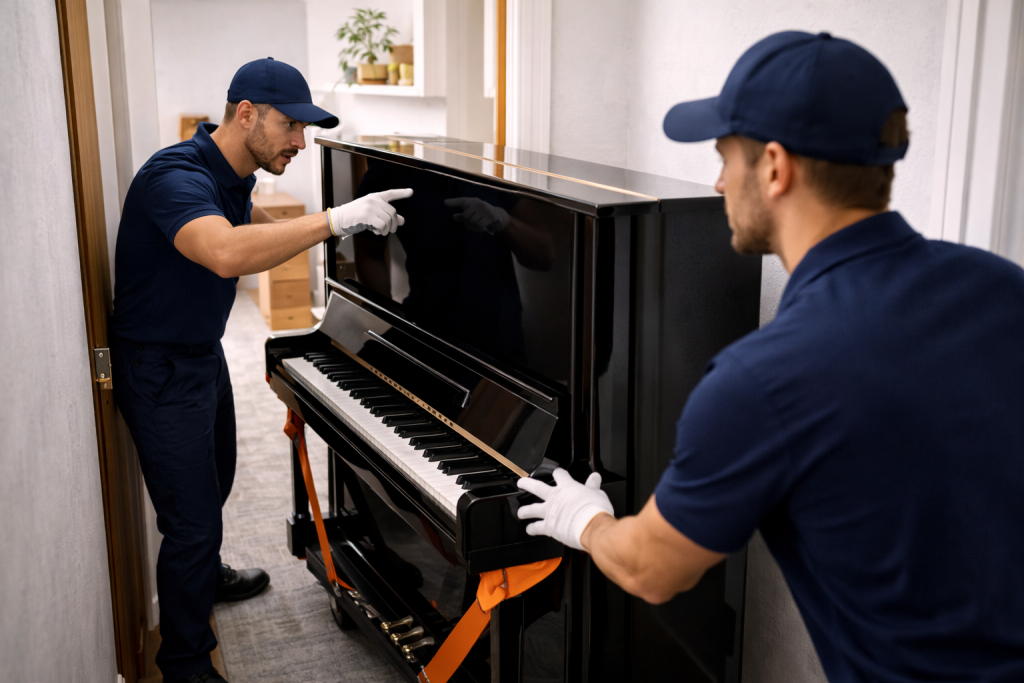
- It can scratch floors
- It can hit walls
- It can slip on stairs
- It can damage its legs or pedals
- It can shift inside a truck
- It can hurt the people moving it
That is why piano moving is usually treated as a specialty service. A couch is bulky. A piano is bulky and delicate at the same time.
What To Expect From Local Specialty Movers Oshawa Belleville
When people hire local specialty movers in Oshawa, Belleville, the process usually starts with basic details about the piano and the home. Movers often want to know the type of piano, how many steps are involved, whether there are narrow turns, and where the piano is going in the new location.
You should expect questions like these:
- Is the piano upright, baby grand, or grand?
- Is it on the main floor or upstairs?
- Are there tight hallways or sharp corners?
- Does the home have front steps or a narrow entry?
- Is the new location ready?
These questions matter because a piano move needs more than a truck and two strong people. It often needs padding, straps, boards, dollies, and a clear plan before anything is lifted.
This is where families often feel more comfortable with companies like Kapoor Moving Services, because the job usually needs a more careful approach than a standard move.
How To Move A Piano Safely Before Moving Day
The best way to reduce stress on moving day is to prepare early. Much of the safety work is done before the movers even arrive.
Here are the most useful steps for moving a piano safely before moving day:
Measure The Full Path
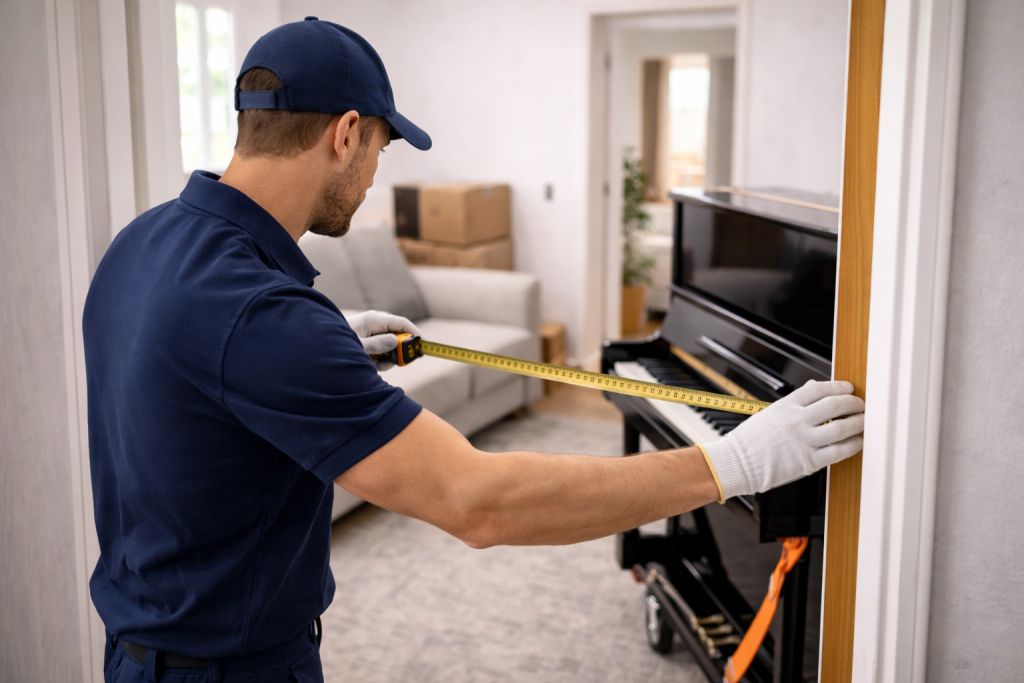
Measure every space the piano must pass through, including:
- doorways
- hallways
- stairwells
- landings
- corners
- entry steps
Do not guess. A few inches can decide whether the path works.
Clear The Route
Remove anything that may get in the way. This includes:
- rugs
- shoe racks
- chairs
- small tables
- floor lamps
- kids’ toys
- wall frames in tight spaces
The route should be fully open from the piano to the truck.
Empty Nearby Items
Remove anything resting on or around the piano, such as:
- picture frames
- candles
- sheet music
- lamps
- decorative covers
If the bench has storage, empty it too.
Plan Parking
Make sure the moving truck can park close to the home. The farther movers need to travel, the more difficult the job becomes.
These are basic but important professional piano moving tips. None of them is complicated, but each one reduces risk.
Professional Piano Moving Tips For Inside The Home
Some of the most helpful professional piano moving tips focus on protecting the house as much as the piano. If you want a deeper look at how movers safely transport pianos and instruments without causing damage, it is worth reading before your moving day
Protect Floors
If you have hardwood, tile, or finished flooring, make sure the movers know before the move starts. Floors can be damaged by dirt, wheel pressure, or sudden weight shifts.
Watch The Corners
Tight corners are often one of the hardest parts of a piano move. The piano’s body may fit through a doorway, but turning it the right way is the real challenge.
Keep Children And Pets Away
A piano move needs focus. Small children and pets should stay away from the route while the movers are working.
Do Not Try To “Help” With Lifting
Homeowners often want to help, but piano moving usually works best when the crew handles the lift without extra hands stepping in at the wrong time.
These steps may seem small, but they make a big difference in real homes.
What Happens On Moving Day
Moving day usually begins with a quick assessment. The movers will assess the piano, the route, the stairs, and the truck’s position. Then they will decide the safest order for the move.
In most cases, the process includes:
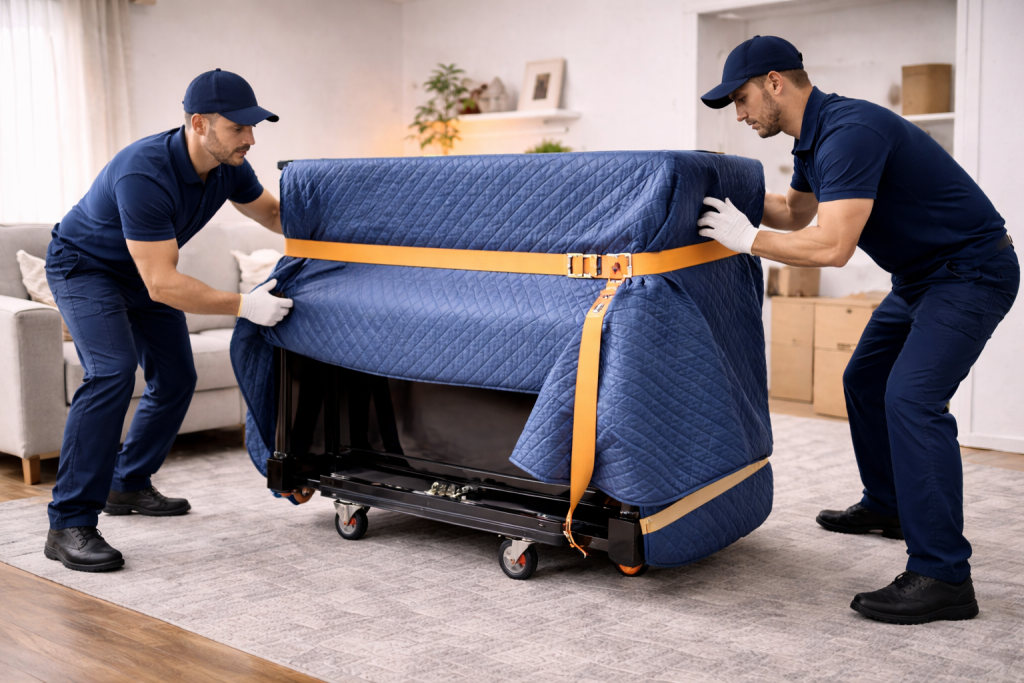
- inspecting the instrument
- protecting it with padding
- securing loose parts if needed
- moving it onto proper equipment
- guiding it carefully through the home
- loading it into the truck
- securing it for transport
This part of the process is one reason people search for local specialty movers in Oshawa and Belleville rather than regular movers. Piano moving is slower and more controlled than many people expect. It should feel deliberate, not rushed.
If the piano is a baby grand or grand, the process may involve more steps. Parts may need extra protection, and the move may take longer because the shape is more difficult to handle.
How To Prepare The New Space
It is easy to focus only on getting the piano out of the old home, but the new home matters just as much.
Before the piano arrives, decide exactly where it will go. This helps avoid extra lifting and repositioning.
Think about these things:
- Is the floor level?
- Is the wall dry and stable?
- Is it near a heating vent?
- Is it near a cold window?
- Is there enough space around it?
One of the most practical points about moving a piano safely is that the move does not end when it enters the new house. Placement matters too. A poor location can affect the condition of the wood and the tuning over time.
It is also smart to wait before tuning. A piano often needs time to settle after a move, especially if the weather, temperature, or humidity has changed.
At this stage, many homeowners who use Kapoor Moving Services or another specialty mover are relieved once the piano is placed correctly and no longer needs to be shifted again.
Common Mistakes To Avoid
Piano moving problems often come from simple mistakes, not dramatic accidents.
Try to avoid these common errors:
- treating the piano like a dresser
- skipping measurements
- leaving rugs in the path
- trying to move it with friends only
- using the wrong dolly
- rushing the move
- placing it in the wrong room without planning
- tuning it too quickly after the move
These mistakes are common because people underestimate the job. That is why professional piano moving tips matter. They are not just for large grand pianos. Even a smaller upright can cause serious problems if handled carelessly.
Conclusion
Moving a piano takes more planning than many people expect. It is not just another heavy item in the house. It is a large instrument with delicate internal parts, an uneven weight distribution, and a high risk of damage if handled poorly. That is why it helps to understand how to move a piano safely before moving day starts.
The smartest approach is simple. Measure carefully. Clear the path. Prepare both homes. Expect the job to take time. Follow solid professional piano moving tips instead of trying shortcuts. When families choose local specialty movers in Oshawa or Belleville, they are usually opting for a safer, more organized process.
A careful move protects the instrument, the house, and the people doing the work. That is the real goal, whether you are moving across Oshawa, relocating to Belleville, or simply having Kapoor Moving Services help you shift the piano into a new home.
“A piano move goes best when the plan is careful, the route is clear, and the handling is treated as skilled work, not rushed lifting.”
FAQs
How To Move A Piano Safely In A House With Stairs?
Stairs increase the difficulty and the risk. A piano should be moved upstairs only with proper equipment, enough trained people, and a clear plan.
Should I Move A Piano Myself?
In most cases, no. A piano is too heavy and too easy to damage. It can also cause injury if lifted the wrong way.
Why Hire Local Specialty Movers Oshawa Belleville?
Piano moving needs specific handling, planning, and equipment. Specialty movers usually understand those needs better than standard movers.
What Should I Do Before The Movers Arrive?
Measure the route, clear the path, remove any nearby items, and ensure the truck has good access.
Do Pianos Need Tuning After A Move?
Often yes, but not immediately. It is usually better to let the piano settle in the new space first.
